
Kumbhaka Meditation — Kumbhaka Dhyāna Āśram KUMBHAKA DHYĀNA ĀŚRAMAM
a path beyond the time
Step into a sacred space of stillness, where breath becomes prayer and silence becomes the gateway to your true self.
Preserving an Ancient Wisdom for Humanity
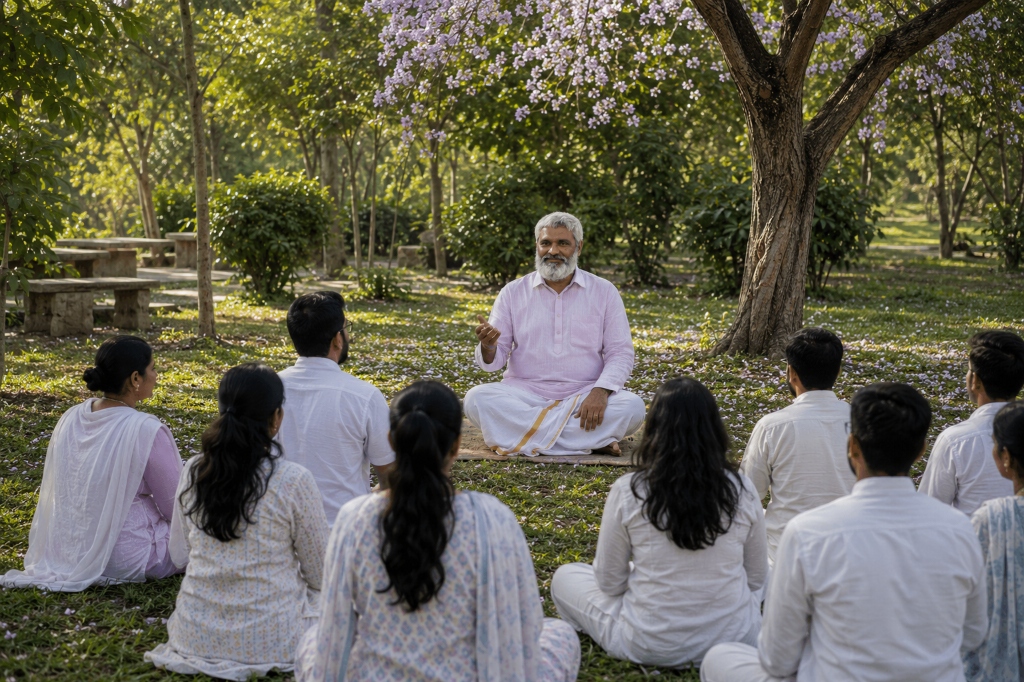
Kumbhaka Meditation is dedicated to preserving and sharing one of the world's most ancient traditions of breath and meditation. According to this lineage, Kumbhaka has been passed down through an unbroken Guru–disciple tradition for over 17,000 years, beginning with the Adi Guru and transmitted to the Sapta Rishis. Through generations of realized masters, this sacred knowledge has been carefully preserved in its authentic form.
Practiced by Siddhas, Rishis & Himalayan Sages
For thousands of years, realized masters of the ancient Shaiva and Nath traditions played an important role in preserving this timeless wisdom to attain inner stillness, expanded consciousness, and Self-realization.
The Breath is the Bridge
Kumbhaka Meditation is founded on the science of conscious breathing. In this tradition, the breath is understood to be the bridge between the body, mind, and consciousness. As the breath becomes calm and subtle, the mind naturally becomes still, allowing the practitioner to experience deep meditation and inner peace.
Our vision is to make the timeless wisdom of Kumbhaka Meditation available to sincere seekers around the world while preserving the authenticity, purity, and integrity of the traditional Guru–disciple lineage.
We believe that true inner transformation begins within. By sharing this ancient science responsibly, we aspire to contribute to a healthier, more peaceful, and more conscious humanity.
Kumbhaka Meditation is not associated with any religion, caste, race, nationality, or social background. It is a universal science of breath and inner awareness because every human being lives through the breath.
People from every culture, faith, and walk of life are welcome to learn and practice. The path is open to anyone who sincerely seeks better health, mental clarity, inner peace, spiritual growth, and Self-realization.
Our Sacred Mission
Preserve Authenticity
Preserve the authenticity of the Kumbhaka Meditation lineage.
Share Breath Science
Share the timeless science of breath with humanity.
Promote Well-being
Promote physical, mental, and spiritual well-being.
Support Seekers
Support sincere seekers on the journey toward Self-realization.
Serve Humanity
Serve humanity with compassion, wisdom, and integrity.
Ancient Wisdom & Practical Discipline
Explore the 21 Sacred Rules, 5 Foundation Pillars, and Practical Sequences dynamically using the CTAs below.
Rule 1: Seek Only Truth
The goal of meditation is not to chase miraculous experiences, but to realize the truth directly. Value reality over your beliefs. This journey toward truth grants human beings genuine peace and self-knowledge.
Rule 2: Begin Meditation with Reverence
View meditation as a sacred inward journey. When you begin with humility, dedication, and respect, the mind naturally settles. Before practicing every day, bow to noble gurus, universal energy, and your inner self, and sit with complete devotion.
Rule 3: Discipline is the Foundation of Practice
Practice without discipline is like a journey without direction. Practicing daily at the same time and in the same manner yields great results. Consistent practice is far superior to occasional meditation. Discipline is the core pillar for achieving success in any practice.
Rule 4: Do Not Chase Experiences
Do not expect extraordinary experiences within a few days. Every practitioner's journey is unique. Do not set expectations for miracles or instant feelings as soon as you sit for meditation. Fixating on results increases restlessness and prevents stability. Natural peace is attained only when you set aside expectations and enjoy the process of practice itself.
Rule 5: Do Not Compare Your Spiritual Journey with Others
Others' experiences belong to their journey. Your focus must remain on your own inner growth. Your journey is unique to you. Every seeker's spiritual path and evolution are different. Grieving that you haven't had the experiences others have, or comparing yourself to others, hinders your progress.
Rule 6: Turn Meditation into a Way of Life
Live with awareness not just while sitting, but also while walking and speaking. Bringing a steady state of mind to every action is true meditation. Rather than treating meditation as a brief daily activity, integrate it into your lifestyle. A meditative, conscious state should reflect in your thoughts, words, and actions. Living calmly and mindfully all day is the real practice; remain in that meditative state even after your session ends.
Rule 7: Meditate on a Light or Empty Stomach
Meditating immediately after a heavy meal leads to drowsiness and fatigue. Meditation deepens more easily on a light stomach. When full, body energy is diverted toward digestion, causing lethargy. It is best to meditate early morning on an empty stomach or a few hours after eating. This keeps the body active and improves concentration.
Rule 8: Live in This Moment
The past is merely a memory, and the future is only an imagination. Meditation always blossoms in the present moment. Stop grieving over the past or worrying about the future; being in "This Moment" (the Present) is true meditation. Observe your inner self and anchor in the present. Living in the present moment liberates you from all mental stress.
Rule 9: Proper Sleep is Necessary
Good sleep is also a form of spiritual practice. Lack of sleep makes the mind unstable. Without sufficient rest for body and mind, concentration fails during meditation, leading to drowsiness. Proper sleep balances vital processes and gives the energy and enthusiasm required for practice. Healthy sleep habits serve as a foundation for achieving stability in meditation.
Rule 10: Stay Completely Away from Intoxicants
Intoxicants may offer temporary sensations, but they cannot grant true awareness. Pure consciousness is the foundation of meditation. Alcohol, smoking, and other intoxicants impair mental clarity, weaken the nervous system, and cloud inner perception. Complete abstinence is necessary for a pure mind.
Rule 11: Observe Every Experience as a Witness, Move Forward
Do not get attached to experiences like lights, sounds, or sudden bliss; they are merely stages along the path. Sensations and visions are not the goal—awareness is. Experiencing lights, sounds, or bodily vibrations during practice is natural. Move beyond them without clinging. Remember that experiences are milestones, not the final destination.
Rule 12: Do Not Fear Even if Fear Arises
Suppressed emotions naturally surface during meditation. Do not fight them or judge them. Old buried emotions, anger, or fear may arise; rather than panicking and stopping your practice, observe them neutrally as a witness. Consciously observing these feelings allows them to dissolve, leaving the mind pure.
Rule 13: Guru is the Solution, Everything is Guru
A Sadguru clears your doubts, guides you, and shows the way, though the practitioner must make the journey. Guidance from an experienced spiritual teacher provides proper direction. A Guru draws upon personal experience to identify and correct obstacles or mistakes beforehand, making your spiritual journey safer and faster.
Rule 14: Digital Fasting
Reducing exposure to social media, non-stop news, and unnecessary information enhances focus in meditation. Do not waste energy or time, and stay connected with nature. Gently detach from digital gadgets that hinder your practice.
Rule 15: Do Not Practice for Siddhis or Powers
Purity is greater than power. Supernatural powers are not the goal—self-knowledge is. Fascination with special powers can stall your spiritual progress. Pursuing miracles or powers through meditation leads to downfall by inflating ego and distancing you from self-realization. Ultimate peace, stillness, and liberation remain the true aims of meditation.
Rule 16: Do Not War with Thoughts, Be Patient
Thoughts naturally arise in the mind; do not struggle to suppress them. Simply observe and release them. A seed does not become a tree overnight; meditation results unfold gradually and naturally over time. Patience is a seeker's greatest strength. When facing restless states or challenging conditions, persist patiently. Only patient practice elevates you to spiritual heights.
Rule 17: Listen to Your Body's Signals
Do not force or strain your body unnecessarily. Continue your practice while maintaining your health. Do not ignore signals such as pain, fatigue, or discomfort during practice. Avoid forced postures that strain the body; sit in a natural posture. A healthy body is the greatest support for practice. If you feel extreme discomfort, pause. The body is the temple for practice; do not neglect it.
Rule 18: Speak Moderately, Silence is a Practice
Silence deepens inward awareness. Unnecessary speech drains mental energy. Reducing words calms the mind. Practicing moderation in speech and observing daily silence conserves inner vitality. The practice of silence slows down thought momentum and strongly aids meditation.
Rule 19: Do Not Criticize Others' Paths
Do not belittle or insult deities, traditions, or spiritual teachers. Multiple paths lead to truth (Bhakti, Jnana, Karma, Raja Yoga), tailored to each individual's stage of evolution. Focus on your own practice and respect others' journeys. If meditation does not deepen your love and compassion for the world, re-examine your practice.
Rule 20: Remember the Ultimate Goal of Meditation
Always remember that the supreme goal of meditation is Self-knowledge and Liberation (Mukti). The ultimate objective is realizing one's true nature. Self-knowledge is the final achievement of meditation. Reflect daily on why you practice and what the ultimate goal is. This clarity provides persistence and continuous inspiration even during difficult times.
Rule 21: Ego is Your Enemy, Recognize It
Thinking "I am a great practitioner" is itself ego. Genuine spiritual growth manifests through humility, love, and selflessness. The inner self shines only when ego dissolves. As practice deepens, subtle ego ("I am meditating" or "I am superior") can creep in. Constantly observe this subtle pride so that practice fosters humility. Only when ego melts does the true divine state express itself within the seeker.
Light / Lamp (Deepam)
Light symbolizes knowledge, dispelling ignorance, fear, and negativity. Focusing on or visualizing the flame slows thought momentum, creating a peaceful, sattvic environment. Heat and light purify the surrounding air, while the flame's rays stimulate the pineal gland via energy channels, aiding deep meditative states.
Steady Posture (Sthirasanam)
Sit with a straight spine, neck, and head aligned. Physical stillness directly induces mental stillness. Minimizing movement conserves vital energy (Prana) and diverts it toward inner awareness rather than muscle action. Sustained still sitting leads to 'Dehabhimana Vinasha' (dissolution of body-identification), allowing one to abide as a silent witness.
Kumbhaka / Breath Control (Pranayama)
Sequence of Yoga: Breath → Prana → Mind → Meditation. Regulating breath via Swara Yoga purifies the 72,000 nadis. Ida Nadi (Left Nostril) activates the parasympathetic system to cool and calm, while Pingala Nadi (Right Nostril) activates the sympathetic system to boost vitality and focus. Mastering the breath stills the mind.
Meditation (Dhyanam)
External achievements, material wealth, and relationships yield only fleeting satisfaction. True, permanent bliss comes from connection with pure Consciousness (Self). Meditation is the direct path to transcend transitory suffering and realize Self-knowledge.
Guru — Gateway to Self-Knowledge
Due to ignorance, humans misidentify as the physical body and mind. A Guru helps one realize directly: "You are not the body or mind; you are Pure Consciousness." In the presence of a Guru, ego dissolves and inward inquiry begins, releasing the fear of birth and death.
Card 1: Overview & Foundation Setup (Card K)
- Philosophical Core & Inner Mindset: Keep the mind completely motionless and still through steady discipline and inward inquiry. All mental turbulence (Chitta Vritti) ceases, entering non-dual absorption (Advaita Samadhi) where suffering dissolves into pure peace, wisdom, and permanent security.
- Environment & Location Setup: Choose a quiet, noise-free space free from disturbances. Turn off all electric lights in the room. Place a lit oil lamp (preferred) or wax candle directly in front of you.
- Seating Support & Alignment: Sit on a soft cushion or mat on the floor to prevent leg numbness. Sitting on a chair is fully permissible if floor sitting causes discomfort. Align your spine, neck, and head in a straight, erect line.
- Initial Preparation: Close your eyes softly, resting your hands calmly together. Bring your mind to a calm, steady, and disciplined state.
12 Left Nostril cycles (K2) + 12 Right Nostril cycles (K3) = 1 Matham (Total 24 breath cycles).
5 complete Mathams (5 × 24) = 120 total breath cycles.
Card 2: Left Nostril Procedure – Ida Nadi / Moon Channel (Card K2)
Subtle Energy Physiology: Ida Nadi (Moon Channel). Cools the physical body, calms the nervous system, and induces deep inward focus.
- Hand Setup (Right Hand / Dakshina Hastamu): Use your right hand to form the posture.
- Mudra Position: Gently press the tip of your right ring finger with the tip of your right thumb to stabilize the posture.
- Nostril Occlusion: Using that same right ring finger, softly seal your right nostril closed.
- Inhalation (Puraka): Inhale slowly, deeply, and continuously through your left nostril (Ida Nadi).
- Breath Retention (Antara Kumbhaka): Hold the inhaled air inside comfortably for as long as possible without straining.
- Exhalation (Rechaka): Slowly and completely release the air back out through the left nostril.
- Repetitions: Complete this exact cycle 12 times continuously.
Card 3: Right Nostril Procedure – Pingala Nadi / Sun Channel (Card K3)
Subtle Energy Physiology: Pingala Nadi (Sun Channel). Generates vital heat, activates metabolic functions, and enhances alertness and intellectual clarity.
- Hand Setup (Left Hand / Vama Hastamu): Switch to your left hand to form the gesture.
- Mudra Position: Gently press the tip of your left ring finger with the tip of your left thumb to stabilize the gesture.
- Nostril Occlusion: Using that left ring finger, softly seal your left nostril closed.
- Inhalation (Puraka): Inhale slowly and deeply through the right nostril (Pingala Nadi).
- Breath Retention (Antara Kumbhaka): Hold the inhaled breath inside comfortably for as long as possible without forcing.
- Exhalation (Rechaka): Gently and completely release the breath out through the same right nostril.
- Repetitions: Complete this exact cycle 12 times continuously.
Card 4: Post-Breathwork Absorption & Scriptural Guidance (Card K4)
- Natural Breath Shift: After completing 1 full Sambha (120 breath cycles: 5 Mathams × 24 cycles), release all manual breath control and return to natural, effortless breathing.
- Eyebrow Center Focus (Ajna Chakra): Direct your entire internal mental focus and gaze to the point between your two eyebrows (the Third Eye center / Ajna Chakra).
- Energy Ingestion & Channel Purification: Firmly visualize and feel universal energy (Vishwa Shakti) penetrating every single cell, initiating deep internal channel purification (Nadi Mandala Shuddhi).
- Concluding Movement (5-Minute Quiet Sitting): When outer awareness returns, keep your eyes closed while sitting quietly in place for at least 5 full minutes before opening them.
- Patanjali Maharshi Insight: When mental modifications dissolve into absorption on liberation, latent karmic seeds (Bija Samskaras) are incinerated. Deprived of fuel, new karmas cannot sprout, rendering the yogi a Jivanmukta (liberated while living) whose individuality merges into pure Consciousness.
- Buddha Insight: Surrender the possessive delusion of 'mine'. All cosmic wealth belongs to the Divine. Neutralize negative mental impressions (Samskaras) through positive ones, and ultimately transcend even the positive ones to achieve complete freedom.
Card 5: Mind Creation & Universal Ethical Directives (Card K5)
- Self-Mastery & Reality Creation: Your personal beliefs, thoughts, and imaginations directly architect your daily reality; you are your own creator.
- Freedom from External Control: External forces possess no inherent power over your life unless you grant it. You retain full authority to reframe your existence at any moment.
- True Victory (Mukti): Winning over material luxury or other individuals is not true success; genuine freedom (Mukti) lies in liberating yourself from karmic bondage through meditation, love, repentance, and selfless charity.
- Absolute Non-Disparagement: Never criticize, belittle, insult, or abuse any spiritual teachers (Gurus), gods, goddesses, traditions, religions, or individuals.
- Respect for All Paths: Honor every person's spiritual journey, recognizing that evolution unfolds uniquely for each individual.
- Relentless Self-Inquiry: Abandon mental laziness and engage in continuous self-inquiry (Atma Vichara) day and night until you directly experience that Divinity is One.
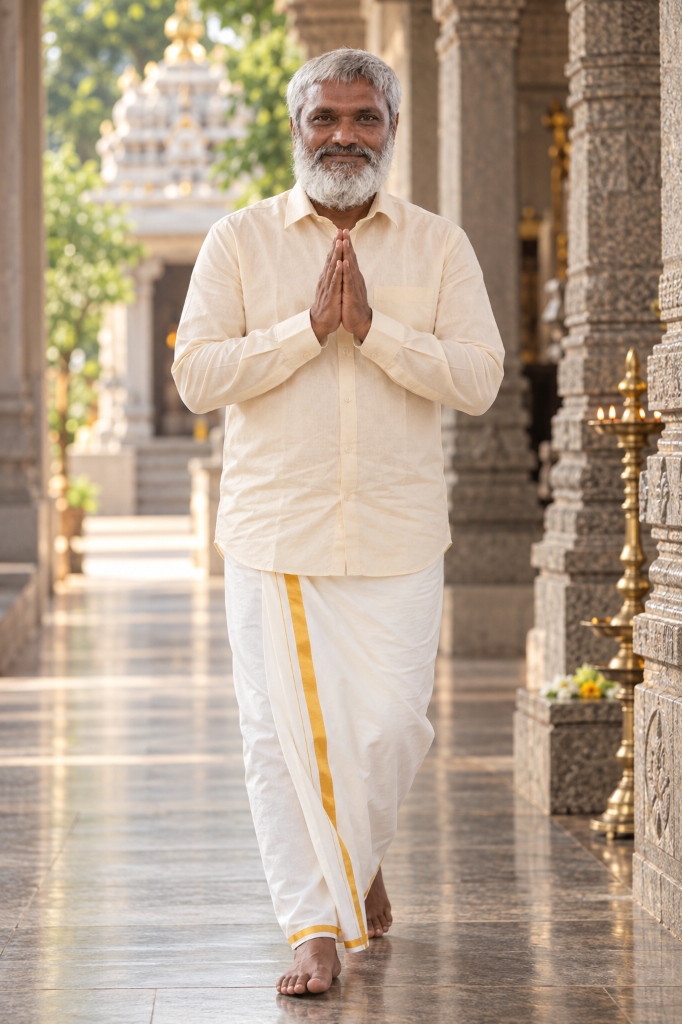
Sadguru Sri Sarkar Guruji
SUKSHMA JNANA PADDHATI — SUBTLE WISDOM MEDITATION
Human beings spend their entire lives in endless quests—searching for wealth, comfort, worldly triumph, love, and peace. Yet beneath all these external pursuits lies a singular primal question: “Where is true joy?” In relentless search of the answer, Sadguru Sri Sarkar Guruji embarked on an arduous spiritual pilgrimage spanning years across India's holiest shrines, engaging in satsang with venerable yogis, ascetics, and realized souls. Through intense sadhana, he realized experientially that the fleeting joys of the outer world cannot endure, that the divinity he sought was never outside, and that the eternal joy, peace, divinity, and supreme wisdom resided within his very own inner being.
Born in the state of Andhra Pradesh, India, Guruji lived from childhood in a manner distinctly detached from ordinary worldly existence. From his tender years, he was constantly accompanied by deep existential inquiries:
• “Who is the true Divine?”
• “Who is worthy to receive my worship?”
• “Is the path I tread authentic and truthful?”
This was not mere intellectual curiosity; it transformed into an intense inner thirst to discover the ultimate truth. For nearly nineteen years, this relentless inquiry continued. Every joy, sorrow, turning point, and test in life was met as an inquiry, yet an ultimate answer remained unrevealed: “What is the truth beyond all of this? Where is the path that transcends it all?”
After years of searching without finding a satisfying revelation, amidst deep disillusionment with external answers, his spiritual odyssey ultimately directed him toward the sacred heights of the Himalayas. There, he received the sheltering grace and presence of a Himalayan Mahaguru. Under his guidance, Guruji was initiated into the ancient, profoundly potent practice of Kumbhaka Dhyana Sadhana. From that decisive moment, a new chapter opened in his life. For approximately five years with unwavering discipline, laser-like absorption, and total surrender, he immersed himself in meditation. This practice did not merely teach him a technique; it guided his consciousness deep within, shifting his vision from external search to inner communion. He directly experienced that the supreme bliss he sought was none other than his own inherent nature, culminating in profound Self-Realization (Atma Sakshatkara).
Resolved to share this experiential truth with all of humanity, Guruji recognized that Self-Knowledge should never remain confined to a secluded few ascetics, yogis, or remote Himalayan caves. He formed a noble sankalpa: “Every ordinary human being must be able to experience this ultimate truth in their daily life.” To fulfill this, he distilled the intricate subtleties of ancient breath retention and awareness into an accessible, practical path known as 'Sukshma Jnana Paddhati Dhyana' (Subtle Wisdom Method of Meditation). Its essence is to guide the individual inward, turn the restless mind from external distractions back to the conscious stillness behind thought, harmonize mind and intellect, and guide each seeker to directly realize their true nature.
Carrying forward thousands of years of sacred yogic lineage, Guruji makes these profound techniques of Kumbhaka meditation easy for the modern individual to practice—and offers this sacred knowledge entirely free of charge to all who yearn for truth. Countless practitioners walking this path today experience deep inner transformation, mental clarity, serenity, and fulfillment. Today, Guruji’s teachings transcend geographical boundaries, bringing the light of inner stillness to seekers across India and across the world.
“What you are seeking is your own true inherent nature. Turn your gaze inward away from the external world just once. What you seek is not outside—and meditation alone is the sacred vehicle.”
- From roots in Andhra Pradesh through 19 years of profound spiritual inquiry to the Himalayas
- 5 years of intense Kumbhaka Sadhana under a Himalayan Mahaguru, attaining direct Self-Realization
- Pioneered the 'Sukshma Jnana' Meditation — freely transmitting timeless wisdom to seekers worldwide
Five Sacred Vows
Pillars of the Kumbhaka tradition that guide the practitioner from temporal noise into eternal awareness.
DISCIPLINE (Tapas)
Consistent, unwavering daily practice leads to lasting inner transformation.
COMPASSION (Karuna)
Nurturing kindness, empathy and deep understanding toward all living beings.
DEVOTION (Bhakti)
Surrender of ego and trusting the sacred breath opens the gateway to the divine.
BALANCE (Samatvam)
Equanimity and harmony across thoughts, emotions and physical actions.
UNITY (Advaita)
Recognizing the single unclouded truth that binds all of existence as one.
"What you are seeking is your own true inherent nature. Turn your gaze inward away from the external world just once. What you seek is not outside—and meditation alone is the sacred vehicle."
Begin Your Sacred Journey
Receive inspiration, updates and guidance on your spiritual journey. Enter your details below to request a sanctuary retreat.